Jet Accountancy

T: 01366 858538
M: 07806 792211

  • Home
  • About Us
  • Services
  • Prices and Quotations
  • Latest News
  • Contact Us
  • LinkedIn
  • Facebook

MAKING USE OF YOUR INHERITANCE TAX ALLOWANCES

March 19, 2024 By Jet Accountancy

It is often said that inheritance tax (IHT) is a voluntary tax, and one that can be avoided if you give away sufficient assets at least seven years before you die so the value of your estate is sheltered by your available nil rate bands. This is not always practical – people do not generally know when they are going to die and they need somewhere to live and the ability to fund their life in the meantime. However, there are various IHT allowances and exemptions that allow lifetime gifts to be made free of inheritance tax, even if you die within seven years of making the gift.

Regular payments from income

Gifts that you make from your income do not count as part of your estate for IHT purposes as long as you can afford to make the payments after meeting your living costs and the payments are made out of your regular income. For example, if you have surplus income each month, you could help a child with their rent, pay school fees for a grandchild or provide financial assistance for a relative.

You can give away as much of your surplus regular income as you like, and also take advantage of various allowances and exemptions to make gifts from your capital free of IHT.

IHT annual exemption

The annual exemption allows you to make gifts of up to £3,000 a year without them being included in your estate for IHT purposes. Unlike many other annual exemptions and allowances, if the IHT annual exemption is not used in full for one tax year, the unused amount can be carried forward to the next tax year. However, the exemption for the current year must be used before any unused amount from the previous year.

If you did not use your 2022/23 annual exempt amount, you can make gifts of up to £6,000 before the end of the 2023/24 tax year without them being added to the value of your estate.

Small gift allowance

The small gift allowance means that you can make gifts of £250 a year to as many people as you like without the gifts counting as part of your estate. However, there is a catch – gifts to the same person cannot benefit from both the small gift allowance and another allowance or exemption.

Wedding and civil partnership gifts

The value of this exemption depends on the relationship between you and the recipient of the gift. For wedding and civil partnership gifts to a child, the exemption is £5,000, for a grandchild, it is £2,500 and for a wedding or civil partnership gift to any other person, the exemption is £1,000.

The same person can benefit from a wedding/civil partnership gift and other exemptions and allowances with the exception of the small gift allowance. For example, if you have not used your 2023/24 or 2022/23 annual exemption and your child marries before 6 April 2024, you could make a wedding gift of £11,000 free of IHT.

Gifts to spouses and civil partners

Gifts to spouses and civil partners can be made free of IHT without limit.

Other gifts

Exemptions also apply for certain gifts to charities or registered clubs, political parties, housing associations and to gifts for national purposes or public benefit.

Filed Under: Latest News

CHECK YOUR NATIONAL INSURANCE RECORD

March 13, 2024 By Jet Accountancy

Paying National Insurance contributions allows individuals to earn qualifying years, which in turn provides them with entitlement to the state pension and certain contributory benefits. Entitlement may also be provided by the award of National Insurance credits.

State pension entitlement

A person reaching state pension age on or after 6 April 2016 needs 35 qualifying years to benefit from the full state pension. A person who has less than 35 qualifying years but at least ten on reaching state pension age will receive a reduced state pension.

It is important to check your National Insurance record to see if you will qualify for the full state pension. This can be done online by visiting www.gov.uk/check-state-pension. Gaps can be filled in by paying voluntary contributions.

Class 3 voluntary contributions

Class 3 National Insurance contributions are voluntary contributions which can be paid to buy additional qualifying years to boost your state pension. Each additional qualifying year increases the state pension by 1/35th. At 2023/24 rates, each additional qualifying year up to the 35 qualifying year maximum increases the state pension by £5.82 a week (£302.86 a year).

For 2023/24, Class 3 contributions are payable at a rate of £17.45 a week. The rate is to remain at this level for 2024/25.

Class 3 voluntary contributions must be paid within six years of the end of the tax year to which they relate, so by 5 April 2030 for 2023/24 contributions. However, unless the contribution relates to the either of the previous two tax years, it is payable at the rate in force when the contribution is made, rather than that applying for the missing year.

Individuals reaching state pension age on or after 6 April 2016 who have missing years between 6 April 2006 and 5 April 2016 (2006/07 to 2015/16) can benefit from an extended window in which to pay contributions for those years. Contributions must be paid by 5 April 2025 and can be paid at the 2022/23 rate of £15.85 per week.

Making voluntary contributions is only worthwhile if, after making the contributions, you have at least ten qualifying years. If you have missing years, but will secure 35 qualifying years by the time you reach state pension age, there is no point in making voluntary contributions.

Paying Class 2 contributions voluntarily

A self-employed earner whose earnings are below the small profits threshold does not benefit from the National Insurance credit available to those whose profits are between the small profits threshold and the lower profits threshold. However, they do have the option to pay Class 2 contributions voluntarily. Where this option is available, at £3.45 per week for 2023/24, this is a much cheaper option than paying Class 3 contributions.

Following the abolition of Class 2 contributions from 6 April 2024, self-employed earners will still be able to make voluntary contributions at the 2023/24 Class 2 rate of £3.45 per week.

Like Class 3, voluntary Class 2 contributions must be paid within six years from the end of the tax year to which they relate. The contribution is paid at the highest rate in force in the period from the year to which it relates to the year in which it was paid.

An extended deadline of 5 April 2025 applies by which to make contributions for missing years between 2006/07 and 2015/16 inclusive. These can be paid at the 2022/23 rate of £3.15 per week.

Filed Under: Latest News

DISPOSE OF ASSETS BEFORE 6 APRIL 2024 TO TAKE ADVANTAGE OF THE HIGHER ANNUAL EXEMPT AMOUNT

March 6, 2024 By Jet Accountancy

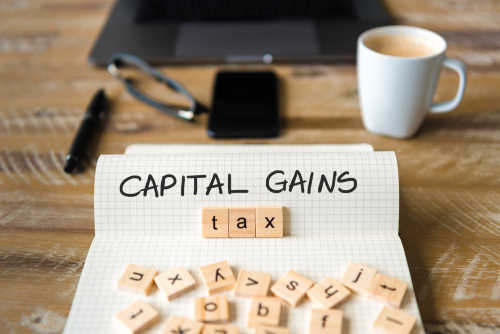
Individuals making capital disposals do not pay capital gains tax if their net gains for the tax year (chargeable gains less allowable losses for the year) are covered by the annual exempt amount. This is essentially a personal allowance for capital gains tax purposes, and each individual is entitled to their own annual exempt amount.

The annual exempt amount is set at £6,000 for 2023/24 (down from £12,300 for 2022/23). It is further reduced to £3,000 for 2024/25. If it is not used in the tax year, it is lost – it cannot be carried forward.

If you are planning disposals that are likely to trigger a gain, it is important to consider the timing and, where the 2023/24 annual exempt amount remains available, whether to make the disposal before the 2023/24 tax year comes to an end on 5 April 2024.

Case study 1

Jacob has not made any disposals in 2023/24. He is planning on selling a residential investment property which will realise a gain of £20,000.

Jacob is single and pays tax at the higher rate.

By making the disposal before the end of the 2023/24 tax year, Jacob will be able to use his 2023/24 annual exempt amount of £6,000, leaving him with a gain of £14,000 on which capital gains tax of £3,920 (£14,000 @ 28%) is payable.

However, if he delays the disposal until after 5 April 2024, he will only benefit from an annual exempt amount of £3,000, leaving a chargeable gain of £17,000 on which capital gains tax of £4,760 will be due.

By making the disposal before 6 April 2024, Jacob is able to save tax of £840. He is also able to preserve his 2024/25 annual exempt amount.

Case study 2

Jane sold a flat in May 2023 realising a loss of £15,000. She plans to sell a painting which will realise a gain of £2,000.

If Jane sells the painting in 2023/24, the gain of £2,000 will be set against the loss of £15,000, reducing the net loss available to carry forward to £13,000. Her annual exempt amount for 2023/24 will be wasted.

If Jane makes the disposal in 2024/25, and this is her only disposal in that year, it will be sheltered by the annual exempt amount of £3,000. Jane will have losses from 2023/24 of £15,000 to carry forward to set against future gains.

Case study 3

John has made chargeable gains of £8,000 in 2023/24. He plans to sell a holiday home, realising a gain of £30,000.

If he sells the property before 6 April 2024, the full gain will be taxable as he has already used his annual exempt amount. However, if he waits until after 5 April 2024 to make the disposal, he will be able to use his 2024/25annual exempt amount to reduce the chargeable gain to £27,000, reducing his tax bill by £840 if he is a higher rate taxpayer.

Spouses and civil partners

Spouses and civil partners each have their own annual exempt amount. While they cannot pass unused annual exempt amounts to their partner, they can transfer assets between themselves at a value that gives rise to neither a gain nor a loss.

When planning asset disposals, spouses and civil partners need consider not only their own available annual exempt amount, but also that of their spouse/civil partner, and the rate at which they each pay tax.

If you have used your annual exempt amount for 2023/24 but your spouse has not, it may be worth transferring the asset to them prior to disposal and making the disposal before 6 April 2024 to utilise their 2023/24 annual exempt amount.

Case study 4

Julian and Jackie are married. Julian has used up his annual exempt amount for 2023/24, but Jackie has hers still available.

Julian is planning on selling a painting on which he expects to realise a gain of £5,800. By transferring the painting to Jackie for her to sell prior to 6 April 2024, the gain will be sheltered by Jackie’s annual exempt amount, so that no tax is payable.

Filed Under: Latest News

SELLING ONLINE – WHEN DO YOU NEED TO TELL HMRC?

March 1, 2024 By Jet Accountancy

Earlier in the year, it was erroneously reported in the press that new tax rules were coming into force which would mean that anyone selling online would need to tell HMRC and pay tax on their earnings.

There is, however, no change in the tax rules, which apply to online sellers as they do to other traders. However, from 1 January 2024 onwards, digital platforms are now required to collect information on online sellers and their income, and they must report this to HMRC by January 2025. Consequently, online sellers who have previously failed to declare taxable income may now come to HMRC’s attention.

Taxable income and gains

Not everyone selling online will need to pay tax or tell HMRC. This is only necessary if the person is trading or makes a capital gain. A person selling some old clothes on Vinted for less than they paid for them does not need to tell HMRC about their income or pay tax on it.

Trading

A person will normally be trading if they sell goods or services for a profit. The normal ‘badges of trade’ apply to determine whether a trade exists.

An online seller who is trading must tell HMRC about their income if their gross trading income is more than £1,000 in the tax year. This limit applies to all income from trading – not just that from online sales.

The £1,000 trading allowance means that if gross trading income is less than £1,000, the income can be enjoyed tax-free and does not need to be reported to HMRC. If gross trading income is more than £1,000, the trader has the option of deducting the trading allowance or their actual expenses. Where actual expenses are less than £1,000, it will be beneficial to deduct the £1,000 trading allowance instead to arrive at the taxable profit.

If the trader has made a loss from selling online, they may wish to report this, even if their gross trading income is below the £1,000 limit. This will allow them to utilise the loss.

Where income from online selling needs to be reported to HMRC, this is done in the Self-Employment pages of the Self Assessment tax return. New online sellers who have not previously filed a return will need to register for Self Assessment no later than 5 October after the end of the tax year in which their trade commenced (so by 5 October 2024 where they started their trade in the 2023/24 tax year).

Capital gains

An online seller may also need to tell HMRC if they make a chargeable gain. However, the chattels rules mean that a gain on a single chattel only needs to be declared if the proceeds are more than £6,000 and the chattel is not exempt, as is the case for private cars.

Filed Under: Latest News

REGISTER TO PAYROLL BENEFITS IN KIND

February 20, 2024 By Jet Accountancy

Employers can opt to deal with taxable benefits in kind through the payroll (known as ‘payrolling’) rather than reporting them to HMRC after the end of the tax year on the employee’s P11D. However, this is only possible if the employer is registered to payroll the benefits. This must be done before the start of the tax year for which the benefits are to be payrolled. It is not necessary to register the benefits every year – once registered for payrolling, benefits remain registered until deregistered. This too must be done before the start of the tax year for which the deregistration is to have effect.

Nature of payrolling

Where a benefit is payrolled, the taxable amount of that benefit is treated like extra salary paid to the employee in instalments with the employee’s regular salary or wage. For example, if an employee has a company car with a cash equivalent value of £4,800 and is paid monthly, the employee would be treated as if they had received extra pay of £400 each month. This is included in their gross pay for tax purposes. The tax is worked out on the total gross pay (including the payrolled benefits), and deducted from the employee’s cash pay.

As most taxable benefits are liable to Class 1A National Insurance rather than Class 1, the taxable amount of the payrolled benefit is not included in gross pay for National Insurance purposes. Instead, the employer must include payrolled benefits in the calculation of their Class 1A liability on form P11D(b), which must be submitted to HMRC by 6 July after the end of the tax year.

At present, all benefits can be payrolled with the exception of employment-related loans and living accommodation.

Registering new benefits

As the start of the 2024/25 tax year approaches, employers should review the benefits that they want to payroll in that tax year. If there are any benefits that are to be payrolled for the first time, the employer will need to register to payroll those benefits before the new tax year starts on 6 April 2024. This can be done online using HMRC’s payrolling employees’ taxable benefits online service (see www.gov.uk/guidance/paying-your-employees-expenses-and-benefits-through-your-payroll).

It is also prudent to review benefits already registered for payrolling to check that you still want to payroll those benefits in 2024/25. If not, the registration will need to be cancelled before 6 April 2024. This too can be done using HMRC’s payrolling employees’ taxable benefits online service.

Looking ahead

In their January 2024 simplification update, HMRC revealed that payrolling will become mandatory from April 2026. If you are still reporting expenses and benefits after the year end on the P11D, you may wish to consider moving to payrolling ahead of the 2026 mandation date. This will save the task of filing P11Ds too (although a P11D(b) will still be required).

Filed Under: Latest News

EXTRACTING FURTHER PROFITS IN 2023/24

February 12, 2024 By Jet Accountancy

As the end of the tax year approaches, it is prudent for those operating their business as a personal or family company to review the profits extracted so far in the tax year and to consider whether it is beneficial to take further profits before the end of the tax year.

There are various ways in which profits can be extracted, and not all routes are equal from a tax perspective. When extracting profits, it makes sense to do so as tax efficiently as possible, while meeting any non-tax considerations that may need to be taken into account. For example, while it may be tax efficient to pay a salary or dividend to a family member, there may be non-tax reasons for not doing so.

Option 1: Salary and bonuses

Where the personal allowance of £12,570 is available in full, it is tax efficient to pay a salary or bonus up to this level. As the personal allowance is equal to the primary Class 1 National Insurance threshold for 2023/24, there will be no employee National Insurance to pay. If the employment allowance is available, there will be no employer’s National Insurance to pay either. However, remember, personal companies where the sole employee is also a director are not entitled to the employment allowance. If the employment allowance is not available, employer’s National Insurance is payable at 13.8% on the excess over £9,100.

If you have not paid a salary or bonus of £12,570 yet this tax year and have the funds available to extract from your company, you may wish to consider paying the shortfall before 6 April 2024.

Option 2: Dividends

Dividends can only be paid from retained profits, and if you have sufficient retained profits, you may wish to pay a dividend before the end of the tax year, particularly if shareholders have not used their dividend allowance, which is £1,000 for 2023/24 and available to all taxpayers regardless of the rate at which they pay tax. The dividend allowance falls to £500 from 6 April 2024, so it may make sense to take dividends before that date if they would be tax-free in 2023/24 but taxed in 2024/25.

Remember, unless you have an alphabet share structure, dividends must be paid in proportion to shareholdings.

Option 3: Pension contributions

It can be very tax efficient for your company to make contributions to your pension scheme on your behalf, particularly if you have not used your annual allowance for the current year, or have unused allowances from the previous three years. The lifting of the lifetime allowance charge paves the way to make further contributions if your pension pot has reached £1,073,100. Your company is able to deduct the contributions in calculating its taxable profits.

Option 4: Benefits in kind

You can also take advantage of tax exemptions to extract profits in the form of tax-free benefits. For example, you can make use of the trivial benefits exemption to provide treats costing no more than £50. Remember, tax-free trivial benefits for company directors are capped at £300 per tax year.

Option 5: Do nothing

If you do not need to use your profits outside your company and would pay further tax on any profits extracted, you may prefer to leave them in your company for now. You also need to ensure that you have sufficient funds available in your business to meet your business costs.

Filed Under: Latest News

NMW FROM APRIL 2024 – MAKE SURE YOU COMPLY

February 8, 2024 By Jet Accountancy

Employers must pay their workers at least the statutory minimum wage for their age. Depending on the age of the worker, they may be entitled to the higher National Living Wage (NLW) or the National Minimum Wage (NMW) for their age band.

It is important to note that the right to be paid at least the statutory minimum applies to ‘workers’, the definition of which is wider than employees.

The NLW and NMW are increased from April each year. In addition, the qualifying age limit for the NLW is reduced from 1 April 2024.

Lower age limit for the NLW

Currently, workers aged 23 and above are entitled to be paid the NLW. This is the highest rate of the NMW.

From 1 April 2024, the age limit is reduced, and all workers aged 21 and above must be paid at least the NLW.

New rates

The NLW and NMW rates applying from 1 April 2024 are set out in the table below.

 Rate
National Living Wage – workers aged 21 and above£11.44 per hour
National Minimum Wage – workers aged 18 to 20£8.60 per hour
National Minimum Wage – workers aged under 18 but above school leaving age£6.40 per hour
Apprentice rate£6.40 per hour

Currently, the NLW is set at £10.42 per hour and is payable to workers aged 23 and above. Workers aged 21 and 22 are entitled to receive a NMW of £10.18 per hour. The NMW is set at £7.49 per hour for workers aged 18 to 20 and at £5.28 per hour for workers who have reached school leaving age but who are under the age of 18. The apprentice rate is also £5.28 per hour.

The apprentice rate is payable to apprentices under the age of 19 and also to those who are aged 19 and over and in the first year of their apprenticeship.

Accommodation offset

Where the worker is provided with accommodation, the minimum amount of pay is reduced by the accommodation offset. This is currently £9.10 per day (£63.70 per week). It is increased to £9.99 per day (£69.93 per week) from 1 April 2024.

Giving effect to the increases

It is important that employers comply with the NMW legislation; penalties for non-compliance are high.

It is not necessary for the worker to be paid the NLW/NMW for every hour they work – what matters is that on average they receive the NLW/NMW for the hours worked in a pay reference period. For example, if a worker aged 35 is paid weekly and works a 40-hour week, from 1 April 2024 they must be paid at least £457.60 for the week’s work.

Although the new rates apply from 1 April 2024, they do not need to be paid from that date if it falls in the middle of a pay reference period. Rather, the new rates must be paid from the start of the first pay reference period to begin on or after 1 April 2024. For example, if the worker is paid weekly on a Friday, the new rates must be paid from the week commencing 6 April 2024. However, if the worker is paid for the month on the last day of the calendar month, the new rates must be paid from 1 April 2024.

As well as increasing the rates, employers will need to ensure that workers aged 21 and 22 receive at least the NLW from 1 April 2024.

Filed Under: Latest News

MAKING PENSION CONTRIBUTIONS BEFORE 6 APRIL 2024

February 2, 2024 By Jet Accountancy

As the end of the tax year approaches, it is prudent to review your pension contributions for the year and consider whether it is worth making further contributions before 6 April 2024. Remember, any annual allowances brought forward from 2020/21will be lost if not used by this date.

The amount of tax-relieved contributions that can be made in any tax year to a registered pension scheme is limited by both your earnings and your available annual allowances.

Earnings cap

Tax-relieved personal contributions to a registered pension scheme are capped at 100% of earnings for the year or, if higher, £3,600 (gross). This can be limiting for company directors who extract the majority of their profits as dividends, as dividends do not count as earnings for these purposes. However, contributions made by an employer (including those by the director’s personal or family company) are not limited by the earnings cap and can be tax efficient.

Annual allowance

The second limit on tax-relieved pension contributions is the annual allowance. Both individual and employer contributions count towards the allowance.

The allowance is set at £60,000 for 2023/24. However, where both threshold income (broadly income excluding pension contributions) exceeds £200,000 and adjusted net income (broadly income including pension contributions) exceeds £260,000, the allowance is reduced by £1 for every £2 by which adjusted net income exceeds £260,000 until the allowance reaches £10,000.

Where the allowance is not used in full in a tax year, it can be carried forward for three years. However, allowances from an earlier year can only be used where the current year’s annual allowance has been used in full. Allowances not used within this timeframe are lost. If you have made contributions to the level of your annual allowance for 2023/24, further contributions can be made to utilise any unused allowances from 2020/21, 2021/22 and 2022/23. The unused allowances for an earlier year are used before those of a later year.

The annual allowance for 2020/21 to 2022/23 inclusive was set at £40,000; threshold income was £200,000; the adjusted net income abatement threshold was £240,000 and the minimum allowance for the year was £4,000. It is important that the correct figures are used when calculating allowances available from earlier years.

Where a pension has been flexibly accessed by a contributor who has reached age 55, a reduced annual allowance applies to prevent recycling of contributions to benefit from further tax relief. This allowance (the money purchase annual allowance) is set at £10,000 for 2023/24. It was £4,000 for 2020/21 to 2022/23 inclusive.

If tax-relieved contributions are made in excess of the available annual allowance, the excess tax relief not due is clawed back by means of an annual allowance charge.

No lifetime allowance charges

The abolition of the lifetime allowance charge from 6 April 2023 (and the lifetime allowance itself from 6 April 2024) provide an opportunity for those whose tax-relieved pension savings have already reached £1,073,100 to make further contributions without incurring a punitive tax charge. However, where pension savings exceed £1,073,100 when accessed, the tax-free lump sum is capped at £268,275 (being 25% of this figure).

Take advice

In deciding whether to make further pension contributions before the end of the tax year, it is advisable to take financial advice.

Filed Under: Latest News

NATIONAL INSURANCE CUT FOR EMPLOYEES AND DIRECTORS

January 23, 2024 By Jet Accountancy

In his November 2023 Autumn Statement, the Chancellor announced a reduction in the main primary rate of Class 1 National Insurance from 12% to 10%. Rather than waiting until the start of the 2024/25 tax year to bring in the change, it applies from 6 January 2024.

The change will benefit employers and directors but will cause something of a headache for employers who will need to implement the change in-year.

Primary Class 1 contributions

Primary contributions are payable by employees and are the mechanism by which they build up entitlement to the state pension. For a year to be a qualifying year, an employee needs earnings at least equal to the lower earnings limit, which is set at £6,396 for 2023/24 (£123 per week).

Class 1 contributions are payable at the main Class 1 rate on earnings between the primary threshold and the upper earnings limit, and at the additional rate on earnings in excess of the upper earnings limit. For 2023/24, the primary threshold is aligned with the personal allowance at £12,570 and the upper earnings limit is set at £50,270, aligned with the point at which higher rate tax becomes payable. Employees with earnings between the lower earnings limit and the primary threshold are treated as having paid primary contributions at a zero rate. This secures a qualifying year for state pension purposes for zero National Insurance cost.

The main primary rate is 12% from 6 April 2023 to 5 January 2024 and 10% from 6 January 2024 to 5 April 2024. The additional primary rate is 2% throughout 2023/24. The reduction in the main primary rate will save an employee up to £62.82 per month.

Directors

Unlike other employees who have an earnings period that corresponds to their pay interval, directors have an annual earnings period regardless of the frequency with which they get paid. Directors’ contributions can be calculated as for PAYE on a cumulative basis by reference to the annual thresholds, or the alternative arrangements can be used under which the contributions are calculated as for other employees each time the director is paid, with the liability being recalculated on an annual basis when the director is paid for the final time in the tax year.

The liability should be calculated using the rates prevailing at the time. However, where the alternative arrangements are used, the in-year change will mean that a composite annual rate for 2023/24 must be used when calculating the annual liability at the year end. For 2023/24 the composite rate is 11.5%.

Giving effect to the changes

Employers will need to update their payroll software before making January 2024 (month 10) payments to employees.

If it is not possible to update the software in time, employers will need to rectify the position before the end of the 2023/24 tax year to ensure that employees and directors have paid the right contributions for the tax year.

Filed Under: Latest News

CAPITAL GAINS TAX YEAR-END PLANNING

January 16, 2024 By Jet Accountancy

No one wants to pay more tax than they need to and, where possible, disposals should be timed to ensure that the best result is achieved from a tax perspective. Where a disposal is made around the end of the tax year, accelerating or delaying the disposal date can impact on the tax that is paid. This is particularly true this year, as the capital gains tax annual exempt amount falls from £6,000 for 2023/24 to £3,000 for 2024/25.

Don’t waste the exempt amount

Each individual has their own annual exempt amount for capital gains tax purposes. It is set against net gains for the tax year (chargeable gains less allowable losses for the year), but before using up any capital losses from previous tax years. The annual exempt amount is lost if it is not used in the tax year – it cannot be carried forward.

Spouses and civil partners are able to transfer assets between. This is useful from a tax planning perspective. If one spouse or civil partner has already used their annual exempt amount and wants to dispose of an asset that would trigger a capital gain, transferring the asset, or a share in it, to the other spouse or civil partner prior to disposal will enable the unused annual exempt amount to be set against the gain.

Timing considerations

When considering whether it is preferable to make a disposal in 2023/24 or wait until 2024/25, it is helpful to consider the following questions:

  1. Have I used up my annual exempt amount for 2023/24?
  2. Will I be a basic rate, higher or additional rate taxpayer in 2023/24?
  3. Have I realised any losses in 2023/24?
  4. Has my spouse/civil partner used their annual exempt amount for 2023/24?
  5. What rate does my spouse or civil partner pay tax at?
  6. Do I expect to realise gains and/or losses in 2024/25?
  7. What rate do I expect to pay tax at in 2024/25?
  8. What rate do I expect my spouse or civil partner to pay tax at in 2024/25?

If you have not made any disposals in 2023/24, it would be better to realise any gain before 6 April 2024 to take advantage of the higher annual exempt amount for 2023/24. Where a spouse or civil partner’s annual exempt amount is available, this can be accessed too by making a no gain/no loss transfer. Making a disposal in 2023/24 rather than 2024/25 can save a couple up to £1,200 in capital gains tax.

The position is slightly more complicated if losses are involved, as allowable losses for the tax year are set against chargeable gains for the same year before applying the annual exempt amount. Unrelieved losses for earlier years are applied after the annual exempt amount. To the extent that allowable losses of the tax year are not relieved against chargeable gains of that year, they can be carried forward.

If you have unrelieved losses for 2023/24 that exceed the chargeable gain, the annual exempt amount would be lost anyway, so there is nothing to be gained by making the disposal before 6 April 2024. Instead, by delaying it, you will be able to set the 2024/25 annual exempt amount against the gain before using the losses carried forward from 2023/24, reducing the overall bill.

If the 2023/24 annual exempt amount has already been used up, when deciding whether to delay the disposal so that it falls in the 2024/25 tax year, it is also necessary to consider the rate at which the gain would be taxed and the overall tax bill. For example, if you are a basic rate taxpayer in 2023/24 but are likely to be a higher rate taxpayer in 2024/25, it may be better to make the disposal prior to 6 April 2024 so the gain will be taxed at 10% rather than 20% (or 18% rather than 28% where it relates to residential property), particularly if you are likely to make other gains in 2024/25 that will use up the annual exempt amount.

Planning ahead is the key. Do the sums first and time the disposal accordingly.

Filed Under: Latest News

  • « Previous Page
  • 1
  • …
  • 12
  • 13
  • 14
  • 15
  • 16
  • …
  • 33
  • Next Page »
Copyright © 2026 · Jet Accountancy · Company number 9012242.